27
Jul
Jadeja Returns as India Finalise Sri Lanka Test Squad
Ravindra Jadeja is back in contention after a tennis elbow recovery as India close in on the Sri Lanka Test squad. Galle opener August 15, SSC from August 23.
SquadRead full article →
In the build-up to IPL 2026 Match 67 at the Rajiv Gandhi International Stadium, CricTracker’s fantasy desk picked Heinrich Klaasen as captain and Virat Kohli as vice-captain. Ten weeks on, the form lines that drove that call still read cleanly through the SRH and RCB totals for the wider fantasy audience.
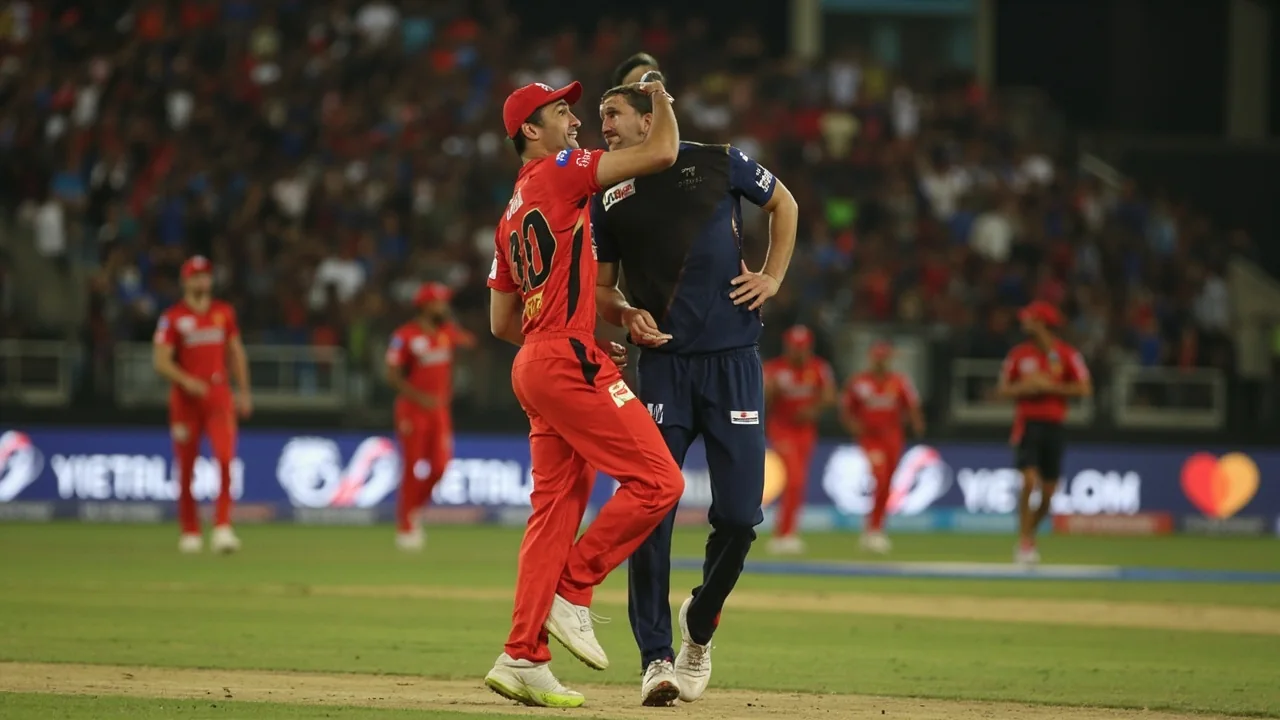
The fixture that the IPL 2026 schedule circled long before the games began was Sunrisers Hyderabad against Royal Challengers Bengaluru at the Rajiv Gandhi International Stadium in Uppal. CricTracker published its Dream11 fantasy prediction for the match on 22 May 2026, and the desk ran with Heinrich Klaasen as captain and Virat Kohli as vice-captain. What matters for a fantasy retrospective is not who the article called, but the reasoning that the calls rested on, and whether the form lines that backed the reasoning still hold up ten weeks later.
The match was the 67th of the regular season, scheduled for a 7:30 PM IST start with broadcast on Star Sports and live streaming on JioHotstar. The CricTracker desk sized up a contest between a Sunrisers side that had just chased down 180 against Chennai Super Kings in 19 overs, and a Royal Challengers side that had gunned down 222 against Punjab Kings in the previous game. That was the contrast the fantasy pick was built on: two in-form lineups, one slightly more settled than the other, and a venue that has historically rewarded the chasing side.
Klaasen’s case was the slow-burn one. The CricTracker desk pointed to 410 runs in his last ten outings going into the Uppal fixture, a bank of innings that compounded rather than spiked. The match before the SRH vs RCB game was a perfect illustration: Klaasen’s 47 from 32 balls in the chase against Chennai Super Kings was the steady middle-overs accleration that let Sunrisers keep the asking rate honest without burning the death overs. For a fantasy pick, that kind of run is what the captain’s armband is built for, because it spreads the points ceiling across innings rather than banking it on one over.
What the desk did not do is oversell Klaasen’s upside. He was the captain because the last ten innings carried him there, not because the next innings was a certainty. The CricTracker framing made a virtue of the chase-friendly Uppal surface: Klaasen batting second against a tiring attack was the test case, and the 410-run form line was the reason the desk put the armband on him rather than on one of the bigger names around him.
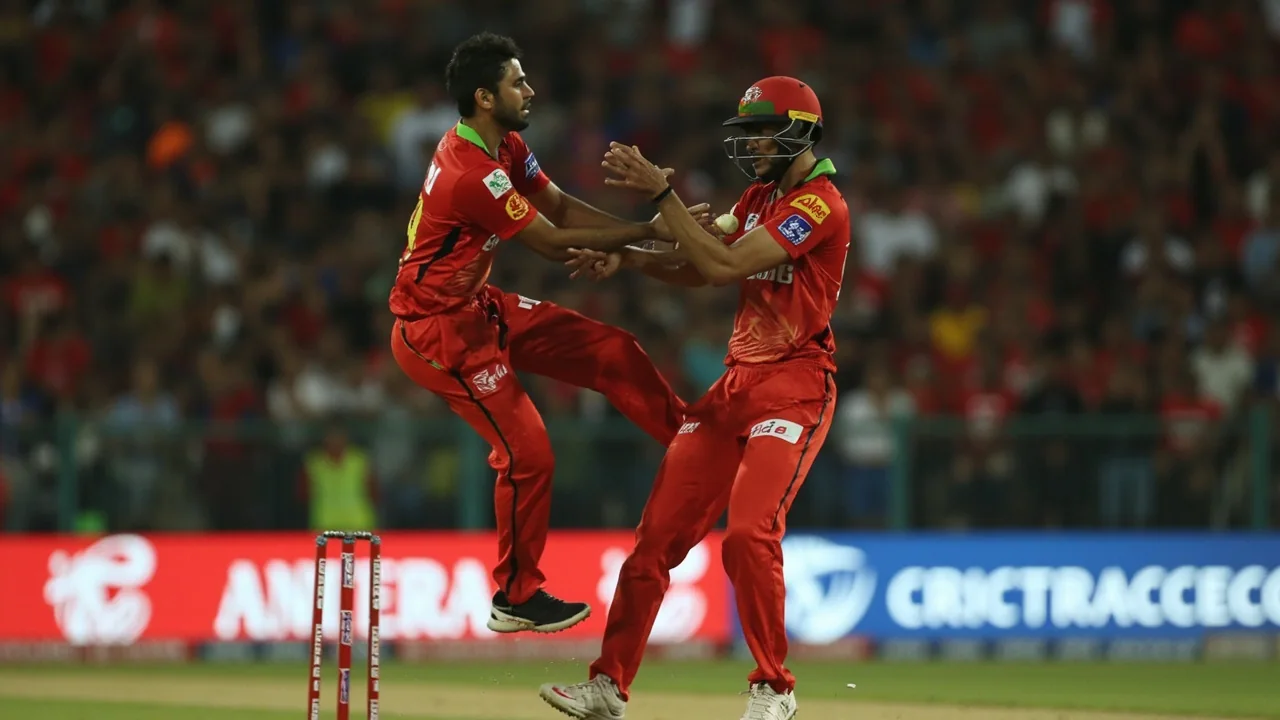
Kohli’s case was the streakier one. The CricTracker desk put him as vice-captain with 413 runs in his last ten games at a strike rate of 160, including the 57 in the previous Punjab Kings game. That is the kind of form that earns a vice-captaincy in a fantasy team: the points ceiling is high, but the volatility is also higher than Klaasen’s. The desk had a choice between two top-order names who would both captain-pick on most fantasy teams, and the read was to load the captaincy weight onto the consistent run-scoring and the vice-captaincy weight onto the higher-variance ceiling.
The 23-run win against Punjab Kings was the more interesting frame than the headline number. RCB chased 222, and Kohli’s 58 was the steady end of a chase that needed one of the top three to stay in. Venkatesh Iyer’s 73 took the more aggressive end of the chase, but Kohli’s role was the one that let the rest of the order bat with freedom. For a fantasy pick, the captain’s armband is sometimes the wrong tool for that kind of role; the vice-captaincy is the right one, because the points ceiling is excellent but the path to it runs through a longer partnership.
The CricTracker article listed Sunrisers Hyderabad at full strength: Pat Cummins as captain, with Travis Head, Abhishek Sharma, Ishan Kishan, Heinrich Klaasen behind the stumps, Nitish Kumar Reddy, Salil Arora, Eshan Malinga, S Kumar, Praful Hinge and Sakib Hussain. The Royal Challengers line that the desk named was the standard combination: Virat Kohli, Jacob Bethell, Devdutt Padikkal, Rajat Patidar as captain, Venkatesh Iyer, an MSK-style wicketkeeper in Jitesh Sharma, Tim David, Krunal Pandya, Bhuvneshwar Kumar, Josh Hazlewood and Rasikh Salam.
That SRH XI is the one that had just chased 180 against Chennai. Ishan Kishan’s 70 from 47 was the headline, Pat Cummins took 3 for 28 with the ball, and Sakib Hussain chipped in with two wickets. The Royal Challengers XI was the one that had chased 222 against Punjab the game before. Both XIs were settled; the only question was whether the bowlers in the Royals’ attack could hold the Uppal run rate, which is what the fantasy pick was implicitly asking.
The CricTracker pitch read was the part that tied the fantasy pick together. The Uppal surface was described as batting-friendly with a quick outfield, and the share between pace and spin was put at 60 percent pace, 40 percent spin. The batting pitch rating was 65 percent, and the average first-innings score at the ground was pegged around 175. Chasing teams had historically done better at the venue than teams batting first, which is what made the Klaasen captaincy a more defensible pick than it would have been at a different ground.
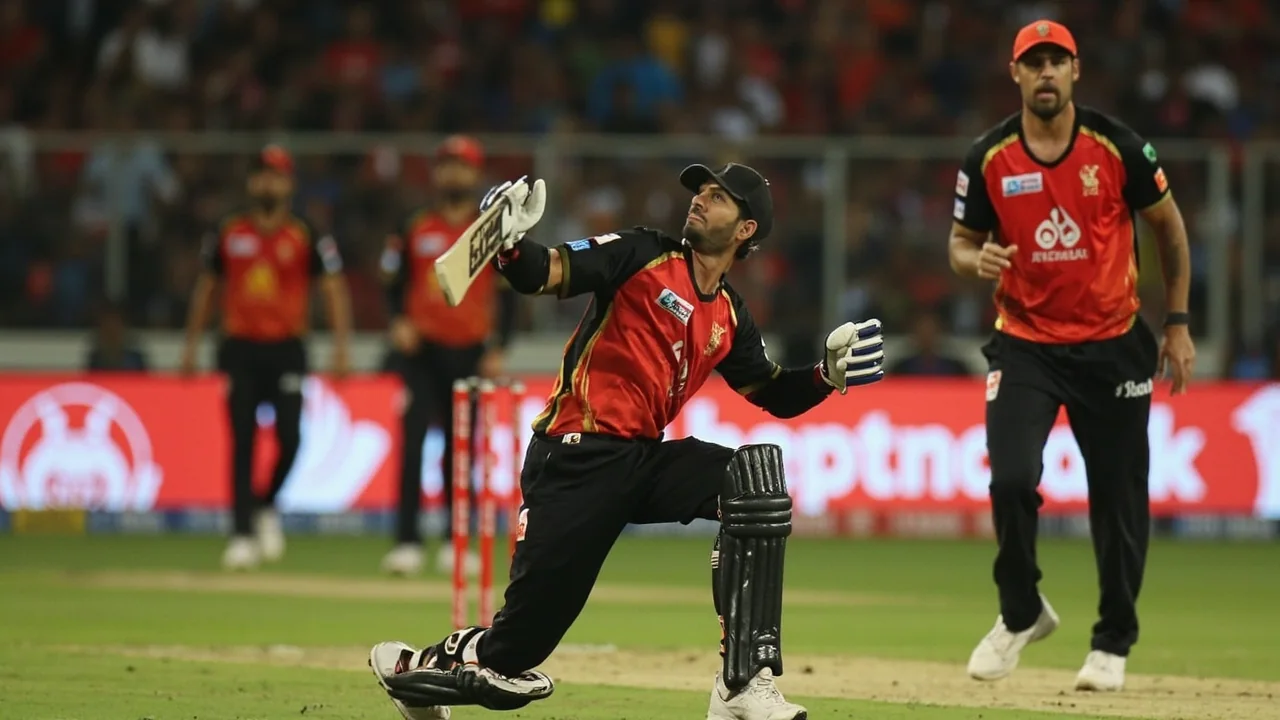
The most useful frame for a retrospective read is the five-match form of both sides. The CricTracker article listed Sunrisers at W L W L W across their last five, with wins over Chennai Super Kings and the Punjab Kings / Mumbai Indians slot, and losses to Gujarat Titans and Kolkata Knight Riders. Royal Challengers were at W W W L L, with wins over Punjab Kings, Kolkata and Mumbai, and losses to Lucknow Super Giants and Gujarat Titans. Both teams were winning more than losing, and the two losses each had were to the same opposition pair.
What the form lines suggested for the fantasy pick was a higher total than the 175 first-innings average. Two strong top orders, a quick outfield, chasing-friendly conditions and a pitch rated 65 percent for batting: the variables all pointed in the same direction. The CricTracker desk did not run a full projection, but the captain and vice-captain pick was built on the assumption that the actual total would sit above the ground average, and that the top-order fantasy picks would be the ones catching the upside.
The CricTracker article carried the standard fantasy disclaimer: the team is intended for free fantasy contests, the publication does not promote paid contests, and the framing references the Indian Government’s Gaming Regulation Bill, 2025. That disclaimer is the legal boundary around every fantasy prediction article published in this category, and the line between “free contests only” and “paid contests” is the line that the Gaming Regulation Bill draws. For a retrospective, the disclaimer also tells the reader what the original prediction was being offered into: a free fantasy contest space, not a paid contest space, and a publication that does not endorse the latter.
The CricTracker desk noted the venue weather at 24.3 degrees Celsius with 80 percent humidity and cloudy conditions. Cloud cover at an evening IPL start is a small but real variable: it tends to help the seamers early, slows the outfield slightly, and can pull the scoring rate down by 5 to 10 runs in the powerplay. The fantasy implication is that the captaincy pick on a top-order batter is slightly more defensive under cloudy conditions than it is under clear skies, and the vice-captaincy pick on a high-variance scorer gets a slightly better upside case if the bowlers can extract early movement. The CricTracker framing did not call the weather directly, but the cloud cover was part of why the desk stayed with the form-line logic rather than swing on a weather bet.
The cleanest retrospective read is that the CricTracker pick was built on durable form lines rather than a single hot streak. Klaasen at 410 runs in ten games and Kohli at 413 runs in ten games at a strike rate of 160 are the kind of inputs that survive a ten-week gap, and the chase-friendly Uppal pitch report is the kind of venue fact that does not change with the calendar. The probable XIs the desk named are the same names that turn up in the wider fantasy cricket conversation, and the CricTracker disclaimer is the same legal frame that any fantasy prediction in this category has to work inside.
For fantasy readers looking to revisit the data set around the file, the fantasy cricket resource on Come Sports carries the broader IPL 2026 captain pick archive and the venue-by-venue pitch notes that the Uppal read sits inside. The CricTracker article remains the primary source for the form lines, the XIs, the pitch read and the disclaimer language; this retrospective is a redistribution of that factual record for a Come Sports fantasy audience, not a replacement of the original.
The CricTracker article does not confirm the actual playing XIs at the toss. The probable XIs are exactly that, and the toss-time decision on a Hyderabad evening can change the composition in ways that the form lines do not predict. The article does not confirm Klaasen’s strike rate at the venue, Kohli’s scoring pattern against Cummins, or how the in-game matchups will play out under the lights. It does not confirm the toss, the dew, the batting order, or the bowling rotations. The prediction is a pre-game read on form and venue, and the match is the part that answers the questions the prediction raises.
That boundary is also the boundary around this retrospective. The CricTracker record is the factual ceiling, and the actual match is the part the article does not cover. Anyone looking for the post-match captain pick revisions, the actual U-turn on the playing XIs, or the in-game fantasy corrections should look at the match report and the post-match fantasy recap, not at the pre-game prediction. The pre-game read is the source of the form lines and the venue read; the post-match read is a separate piece of work that the CricTracker prediction was always going to lead to.
Ravindra Jadeja is back in contention after a tennis elbow recovery as India close in on the Sri Lanka Test squad. Galle opener August 15, SSC from August 23.
Washington Sundar's hamstring setback has paused India's Sri Lanka Test squad call. Scans and Centre of Excellence clearance now sit ahead of the August 4 Colombo arrival and the Galle opener on August 15.
Pat Cummins, Josh Hazlewood and Nathan Lyon are back in the same 13-player squad for the first time in a year.